

The 8 Principles of Wing Chun
1. The principle of the “Centerline”
2. The principle of “Economy of motion”
3. The principle of “Facing and adaptability”
4. The principle of the “Fixed elbow”
5. The principle of “Simultaneity”
6. The principle of the “Four gates”
7. The principle of the “Trapping hand”
8. The principle of “Sticking”
1. The principle of the “Centerline”
The Centerline is a fundamental concept of Wing Chun theory. It plays an important role in understanding basic movements, as well as defense and attack. The centerline is an imaginary axis running through the human body.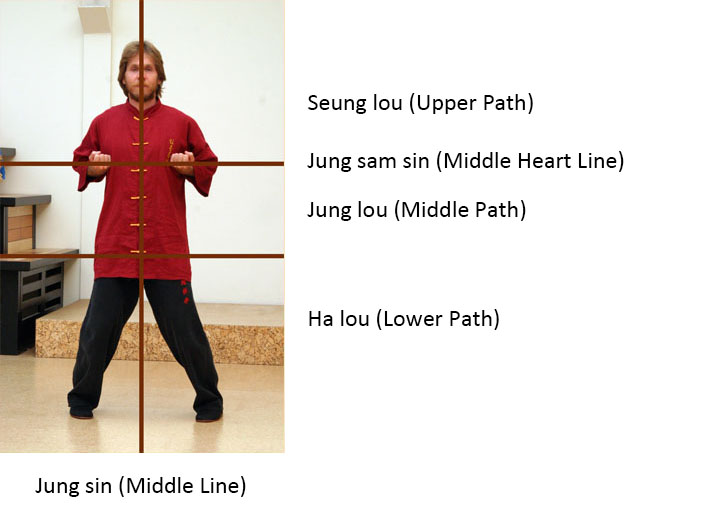 Movements and rotations are performed around it, and during practice it is of key importance that our centerline is in the correct position. At the same time, vital internal organs lie along this line, so attacks are directed at this area, and it is also the most important area to defend. It is also the most vulnerable part of the body. If an attack targets our side, it can be neutralized by turning, while attacks aimed at the centerline are primarily deflected with the hands. The opponent’s centerline may change depending on the direction of the attack and their angle relative to us. It is also important that the body and back remain straight. Wing Chun does not typically use movements that require leaning forward or backward; instead of leaning away from an attack, the practitioner moves.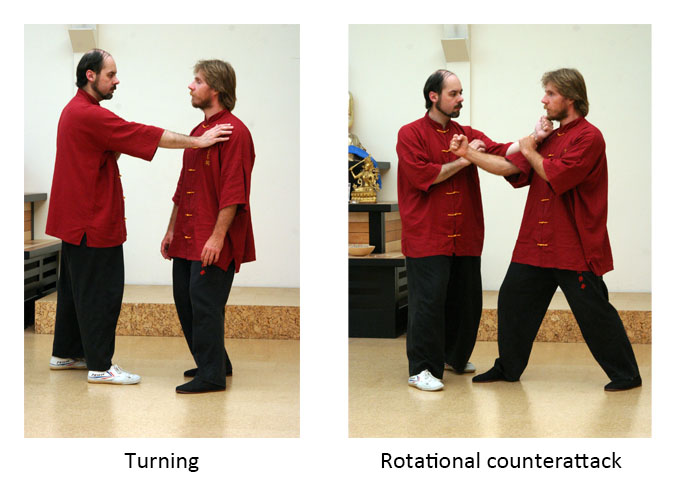
2. The principle of “Economy of motion”
In combat, Wing Chun strives for the least possible movement. In attack, we always move in the most direct direction. There are no deceptive movements or feints. In defense, only the necessary movement should be performed—the deflection only redirects the opponent’s hand enough so that it no longer reaches us. Movement occurs only in response to an actual attack; the continuous maneuvering seen in other styles is not present. The fighting distance is shorter than in most other styles, which also makes movement more economical—smaller steps and turns; the opponent’s attack is only reacted to when it enters fighting range. The shorter distance also reduces the amount of force required (shorter leverage), so people with smaller builds, including women, can also practice it. It is important to always use the appropriate amount of energy. Both too little and too much energy are mistakes. For this, it is essential that the practitioner learns to relax. If any part of the body is tense, it makes the whole body rigid, which the opponent can exploit.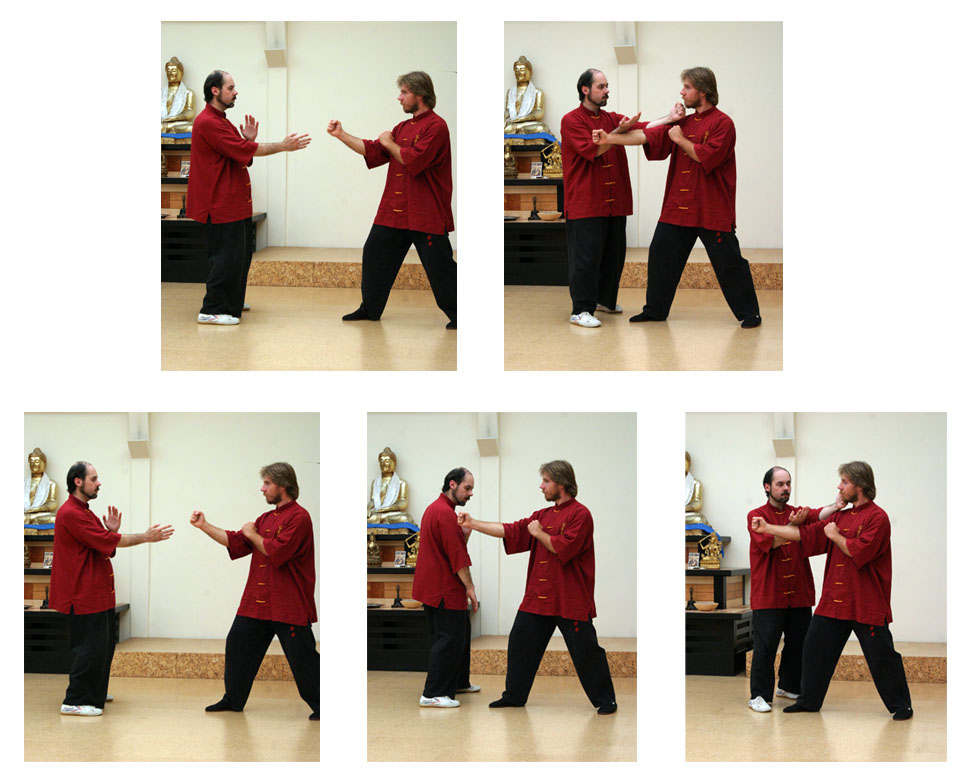
3. The principle of “Facing and adaptability”
In Wing Chun, stances are designed so that the hips always face forward, toward the opponent (“the Dan Tian faces the opponent’s centerline”). This requires equal and balanced use of both hands. At the same time, these positions are never rigid. In attack, we always aim toward the opponent’s more vulnerable or weaker side, while in defense we neutralize the opponent’s force by avoiding it (through rotations, turning defenses, and small steps).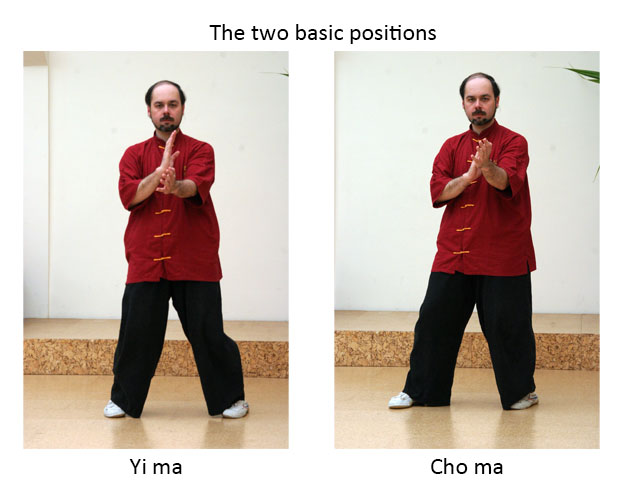

4. The principle of the “Fixed elbow”
The positions are structured to form a closed system. In the basic position, the arms protect the body and do not move away from it; the elbows remain within the body’s line. If the position of the hand is incorrect, the technique will not work. Execution must always be precise and correct. (Grandmaster Yip Man named his two sons Yip Jeun and Yip Jing. “Jeun” means “correct,” and “Jing” means “precise.”)
(The two basic positions are shown in the previous section.)
5. The principle of “Simultaneity”
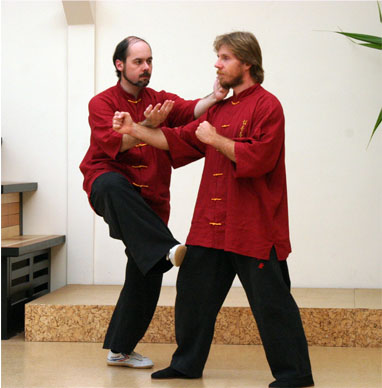
To increase effectiveness, Wing Chun masters rejected the “give-and-take” style of fighting. Counterattacks occur either simultaneously with the defense (one hand deflects while the other strikes), immediately after the defense, or the deflecting hand itself transforms into an attack.
 6. The principle of the “Four gates”
For defensive purposes, the body is divided into three height levels and four gates. The upper level is above the rib gate, where only the hands are used for defense. The middle level extends from the rib gate to the groin, where both hands and occasionally the legs are used. The lower level is below the groin, where only the legs are used. The four gates are formed by the intersection of the centerline and the so-called heartline passing through the rib gate. The four gates symbolize attacks coming from four different directions and the most economical ways of deflecting them with the arms. While many variations of techniques exist across martial arts, one thing remains constant: the opponent must approach, and these directions are anatomically limited. Therefore, one should primarily learn to defend directions rather than individual techniques.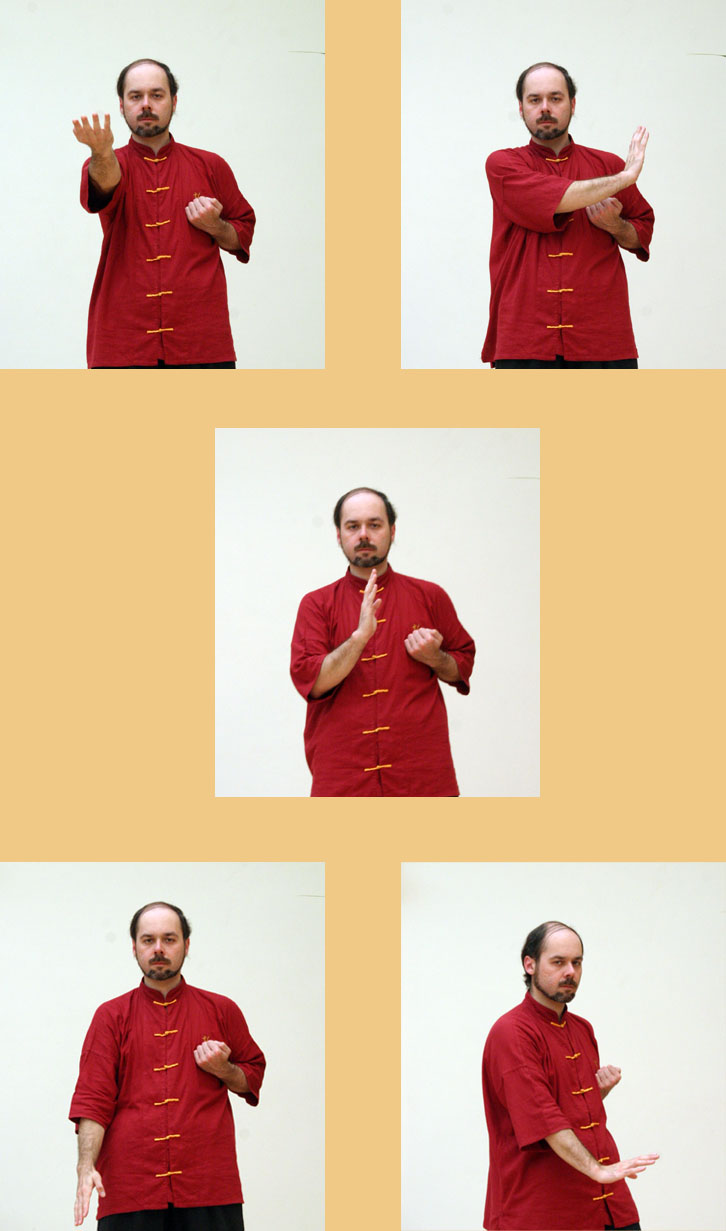
7. The principle of the “Trapping hand”
In defense, we aim to control and immobilize the opponent’s arms in order to place them in a defenseless position.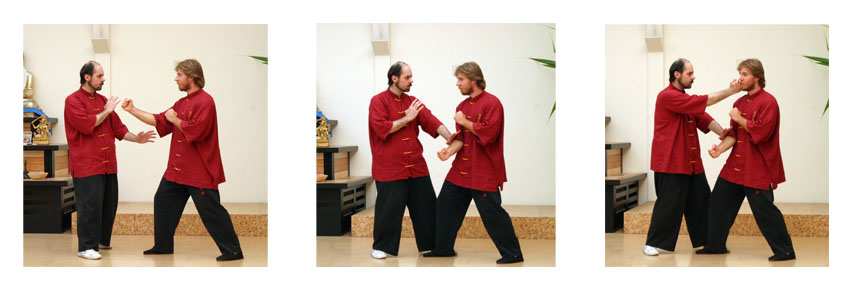
8. The principle of “Sticking”
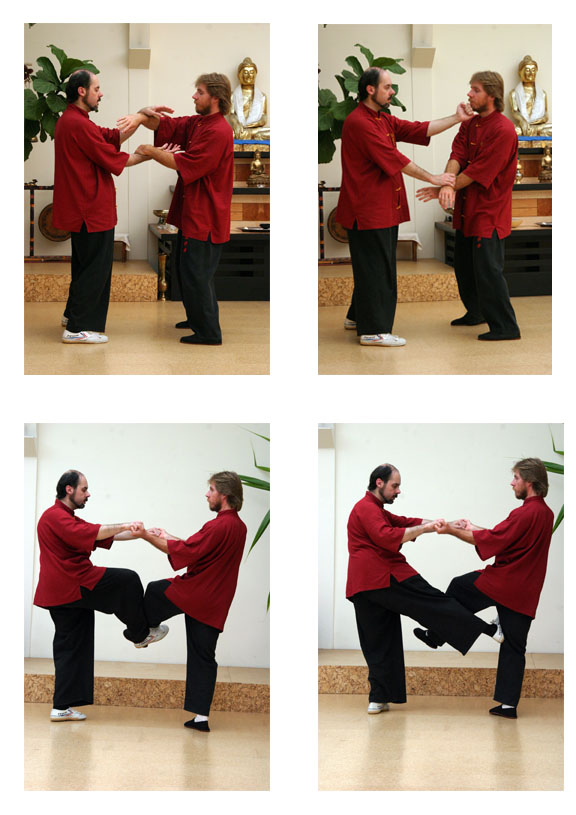
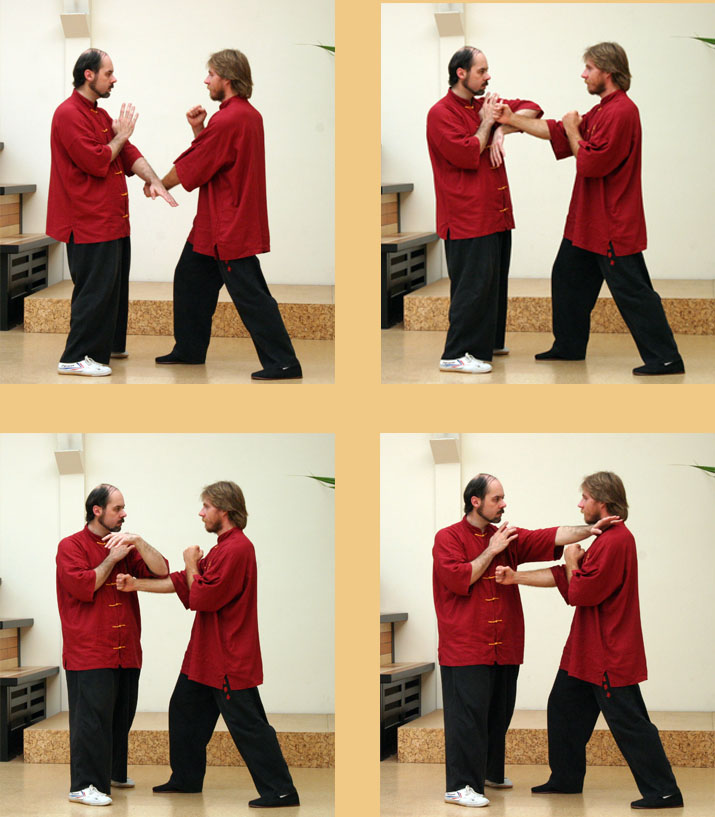
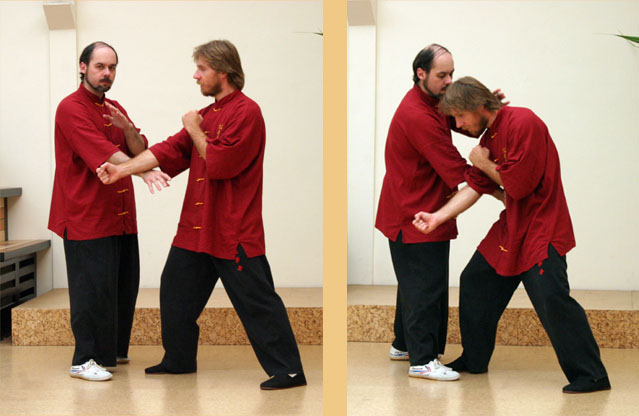
One of the most distinctive Wing Chun techniques. During combat, we aim to continuously control the opponent’s limbs. To achieve this, we often maintain contact with the opponent’s arms, allowing us to better feel their movements and react more quickly. In attack, we aim for the opponent’s movement to “stick,” meaning we open their defense for counterattack. (One saying states: “If it comes, stop it; if it retreats, follow it; remove the hand and advance straight forward!”) To develop this, special “sticky hands” and “sticky legs” exercises exist.
Examples of movement sequences from Chi Sau (sticky hands) and Chi Geuk (sticky legs) exercises – attacks executed from basic movement.